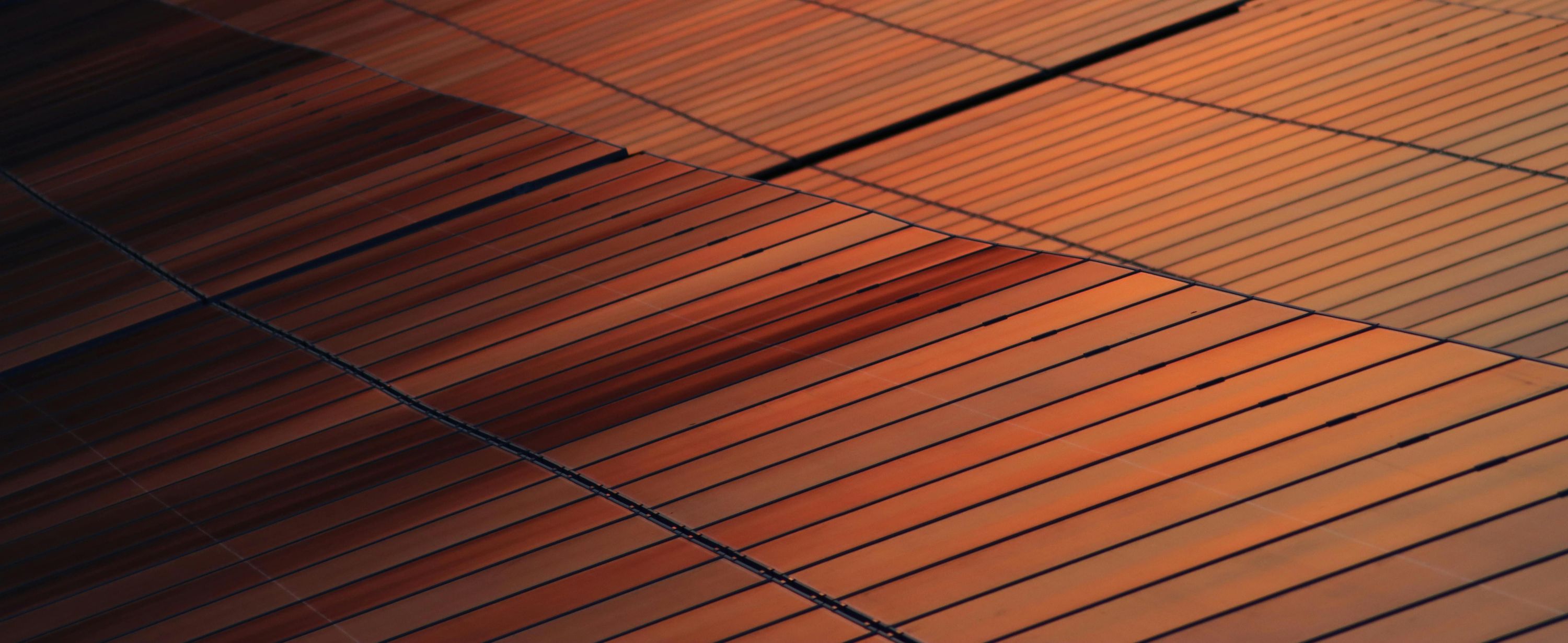
First Solar Series 7: American Technological Leadership in the Solar Industry
The demand for high-quality solar modules "Made in America" continues to grow. With the Series 7, First Solar not only sets new benchmarks for performance and efficiency but also reinforces its commitment to a robust American solar industry. A closer look at this innovation from Ohio reveals why these modules are particularly appealing for large-scale solar projects.
Technological Evolution in Service of the Energy Transition
The Series 7 modules represent the consistent advancement of First Solar's proven thin-film technology. This new generation delivers enhanced performance while optimizing resource efficiency. The larger module format enables more efficient land use for utility-scale projects.
Key Advantages for Large-Scale Projects
The Series 7 was specifically designed to meet the demands of American solar projects. Its lower temperature coefficient ensures stable yields even in high-temperature conditions—an essential advantage, particularly in sun-drenched regions. The robust construction and proven thin-film technology ensure exceptional durability and reliability.
Made in America: More Than Just a Label
Manufacturing in the USA offers tangible benefits. Shorter transport routes not only reduce the carbon footprint but also minimize potential supply chain risks. Production adheres to the highest quality standards while creating skilled jobs in the American solar industry. With planned expansions in production capacity, First Solar reinforces its long-term commitment to the U.S. market.
Sustainability in Production
A special focus is placed on sustainable manufacturing. The production process has been further optimized to minimize energy and resource consumption. First Solar’s established recycling program also enables nearly complete recovery of module materials at the end of their lifecycle—an essential factor for the overall footprint of large-scale solar projects.
Focus on economic efficiency
The Series 7 impresses not only with its technical capabilities but also with its economic advantages. The optimized module size reduces installation effort and, in turn, overall system costs. High energy yields and proven durability ensure attractive returns throughout the project's lifecycle. Additionally, project developers benefit from planning reliability thanks to a robust local supply chain.
Future-Proof Investment
With the Series 7, First Solar delivers a future-ready solution for the American solar market. The combination of technological innovation, local manufacturing, and sustainable practices makes these modules a compelling choice for ambitious solar projects. Continuous investments in research and production capacity further emphasize First Solar’s long-term commitment to the U.S. market.
Conclusion
The First Solar Series 7 exemplifies the resurgence of the American solar industry. It combines technological innovation with local value creation and sustainable production. For project developers and investors, it offers an appealing mix of performance, reliability, and economic prospects.
Interested in detailed information about the First Solar Series 7 for your next solar project? Our experts are happy to advise you on technical specifications and potential applications.
Related posts
)
The saying "safety first" is certainly very important in many areas of life. Everyone is talking about different topics: financial, private, professional. One aspect that concerns us all is fire protection. This level of safety in the event of a fire is particularly high in public buildings such as hospitals, care facilities or daycare centers.
)
)
Time is money – this old saying is especially true when installing solar power plants. Cabling is a critical cost factor that is often underestimated. But this is precisely where there is significant potential for savings: up to 20% of the total costs can be saved by using pre-assembled cable harnesses. How is this possible?
 "PV-Anlage in einer trockenen, warmen Wüstenregion")
The requirements for solar cables in desert regions are extreme: temperatures of over 60°C, intense UV radiation, sandstorms and strong temperature fluctuations between day and night place the highest demands on the materials used. In our laboratory studies, we have investigated how these extreme conditions affect the long-term durability of solar cables and which technical solutions offer optimum protection.
)
They are small, inconspicuous and yet crucial for the reliability of any photovoltaic system: MC4 connectors. As a standardized interface between solar modules, inverters and other components, they play a key role in the safety and longevity of solar installations. But what makes a really good connector?
)
)
When planning large-scale PV systems, the correct dimensioning of generator junction boxes (GAK) is a key decision. While standard solutions are sufficient for many applications, complex projects often require customized configurations. The trick is to recognize when which approach is the right one.
)
Discussions about efficient solar power plants often focus on modules and inverters. However, one often overlooked factor plays a crucial role in determining the performance and durability of the entire system: the quality and design of the cabling. Especially in large-scale projects, custom cable solutions can make all the difference.
 "Schwimmende Solaranlagen auf einem See")