
How battery storage systems can reduce your electricity costs by up to 90%
In industrial operations, efficient management of energy costs is crucial. The use of energy storage systems, especially battery storage systems for peak shaving, plays a crucial role not only in minimizing energy costs but also in improving grid support and stability. For companies with annual operating hours below or above 2500, these methods offer significant savings potential.
The 7000-hour rule and its impact on energy management
The 7000-hour rule stands out in energy management as a strategy that offers companies with high energy consumption throughout the year the opportunity to reduce their grid charges by up to 90%. This benefit applies to companies that are able to smooth out their energy consumption peaks and thus maintain a nearly constant demand on the electricity grid for 7000 hours a year. These significant discounts on grid charges are intended to improve the efficiency and stability of the electricity grid by promoting a balanced load with minimal extreme fluctuations. This underlines the role of energy storage systems as a key resource for effective energy load management.
Benefits of Energy Storage and Peak Shaving for SMEs
While the 7000-hour rule offers particular benefits for large industrial companies with extensive production processes and consistently high energy demand, the scenario for the majority of companies is different. Many companies, especially small and medium-sized ones, do not reach this 7000-hour threshold due to their specific operating times and cycles. Instead, they often operate in a range of below 2500 hours or just above, which requires alternative strategies to optimize their energy costs and improve their support of grid stability.
For these companies, the intelligent use of technologies such as energy storage systems and methods such as peak shaving offers significant opportunities to increase their energy efficiency. In addition, they can benefit from financial incentives by contributing to improved grid stability. In addition, they can combine peak shaving with additional applications such as optimizing PV self-consumption and using time-variable tariffs to significantly reduce their energy costs. Even if they do not directly benefit from the 7000-hour rule discounts, they can still achieve significant energy cost savings and optimize their operations through customized energy management and storage solutions.
Optimization potential for companies with less than 2500 operating hours
Companies with less than 2500 operating hours are often faced with the challenge of optimizing their energy costs. Here, the strategic application of peak shaving through battery storage systems offers an effective solution. This technique allows energy to be stored during off-peak times and used during peak times, smoothing load profiles. This not only improves the efficiency of grid use, but also grid support, ultimately leading to lower power prices.
Opportunities for companies with more than 2500 operating hours
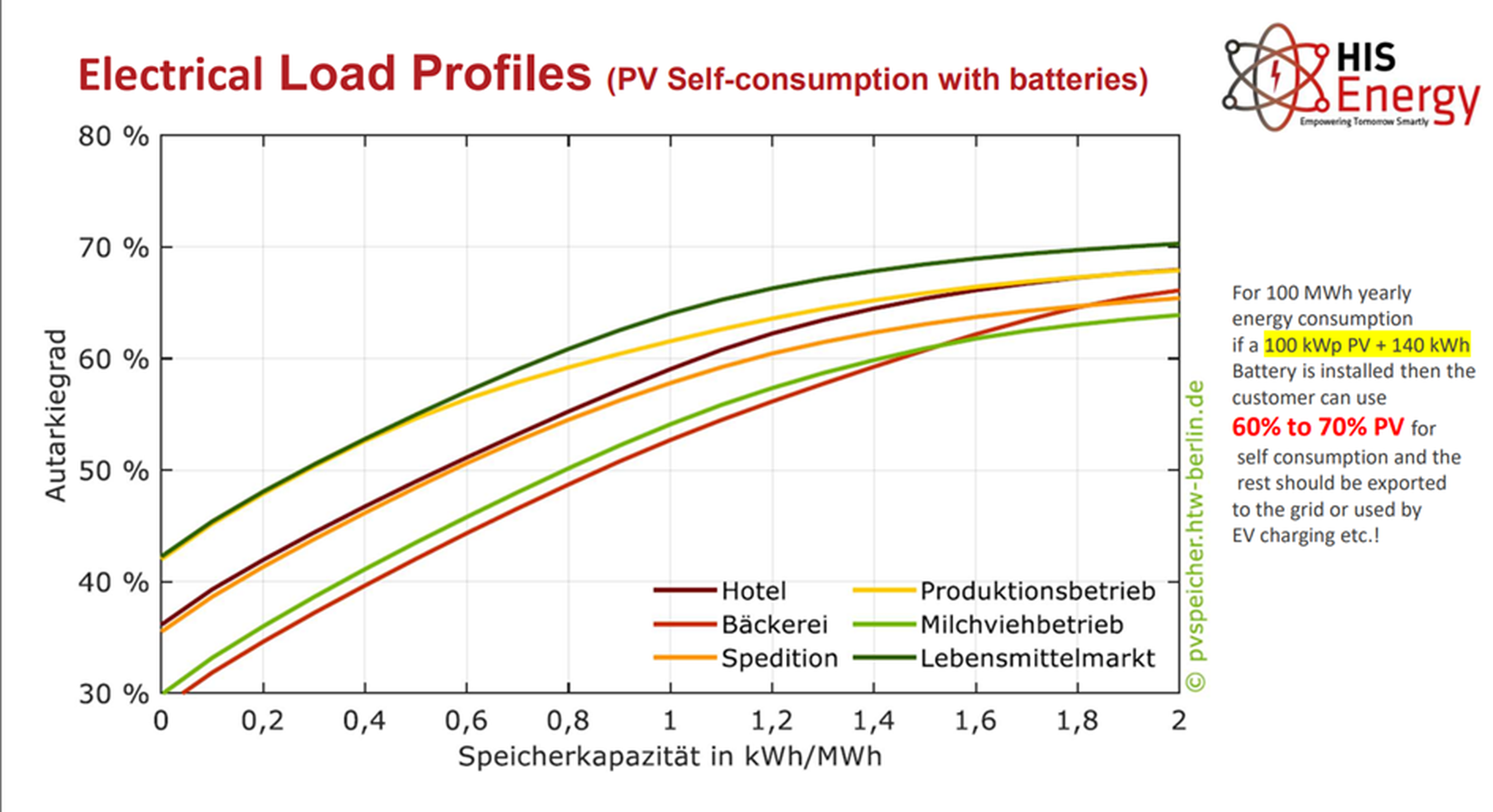
Companies that operate more than 2500 hours per year discover further optimization potential through peak shaving. Battery storage systems offer the opportunity to significantly reduce power prices by eliminating 15-minute energy peaks. They improve consumption efficiency by charging the batteries during low-price periods and discharging them during high-price periods, thus optimizing energy expenditure. In addition, these systems help increase sustainability by increasing PV self-consumption and adapting energy use to environmentally friendly practices.
The role of intelligent energy management
A single unattended 15-minute power spike can wipe out a whole year's worth of peak shaving benefits. Effective peak shaving depends on the intelligent energy management of modern energy storage systems. These systems enable precise control of energy flows and prepare batteries for peak shaving by adjusting the batteries' state of charge (SOC) using load forecasting algorithms and intelligent approaches. This careful preparation allows companies to benefit from lower electricity prices and increase their energy efficiency, while ensuring that the benefits of peak shaving are not compromised by unexpected power spikes.
In addition, battery storage system technology allows flexible adaptation to a company's individual energy needs. This flexibility is particularly relevant for companies that are subject to seasonal fluctuations or whose energy consumption is determined by production cycles. The ability to store and use energy precisely when it is most cost-effective represents a significant competitive advantage.
In summary, the use of energy storage systems offers significant opportunities for companies of all sizes to optimize their energy costs. Implementing strategies such as peak shaving and peak shifting can lead to significant reductions in electricity costs while also making a valuable contribution to stabilizing the power grid.
Summary and Outlook
Investing in energy storage systems, including battery storage, is a smart decision for businesses looking to increase energy efficiency and reduce operating costs. This advanced technology enables control over energy costs and paves the way for a more sustainable and cost-efficient future.
Related posts
)
With our plug-and-play battery solution, we are paving the way to a more sustainable future
In a world that is increasingly looking for sustainable solutions, the energy sector faces the challenge of efficiently integrating and utilizing renewable energy sources. Energy storage plays a Energy storage plays a crucial role in bridging the gap between energy production and consumption. At ees Europe 2024, Europe's largest and most international trade fair for batteries and energy storage systems, HIS-Energy proudly presents its latest innovation: The Plug & Play Battery Solution, specifically designed for commercial and industrial applications.
 "Peak Shaving Diagramm")
Peak shaving, also known as peak load capping, refers to the reduction of peak loads in electricity consumption, which can cause significant costs, especially for large industrial consumers. These peaks can be reduced by using commercial storage systems by supplementing the power supply during peak load times with the energy stored in battery storage systems.
)
Battery cells in a conventional battery are connected to form a battery module, regardless of size and capacity. These battery cells are connected to one another to supply homes or businesses with stored solar energy for hours. By connecting multiple battery modules, the capacity of the battery is scaled.
 "Kunde prüft per Smartphone-App zum Energiemanagement seinen Energiebedarf")
BAFA funding for EMS and battery storage: How energy management improves cost-effectiveness
Energy is increasingly becoming a strategic issue for businesses. Rising costs, the expansion of in-house photovoltaic systems, new charging infrastructure and growing electricity demand are making on-site energy supply increasingly complex. At the same time, there is growing interest in battery storage systems, which allow self-generated electricity to be used more flexibly and help reduce peak loads.
)
The days of simple application scenarios in the energy industry are over. Modern energy management systems (EMS) are evolving into multifunctional control centers that intelligently combine various applications. A development that is not only technically fascinating, but also economically convincing.
 "Zwei Arbeiter beraten sich über die schwimmende PV-Anlage auf dem Wasser vor ihnen")
Floating PV systems, i.e. solar systems that are installed on water surfaces, are becoming increasingly important. They not only offer a solution for land use on bodies of water, but also enable more efficient energy generation, as the cooling effect of the water increases the output of the solar modules. However, the specific conditions on the water place high demands on the technical components - especially the cabling.
 "Ein Sparschwein, Taschenrechner und ein paar Glühbirnen auf einem Tisch")
)
Harnessing the sun—what sounds like a vision of the future is already a reality with modern charging systems. Smart charging stations, combined with PV systems, enable not only environmentally friendly mobility but also enhance the overall economic efficiency of the energy infrastructure. A concept that opens up particularly interesting opportunities for businesses.